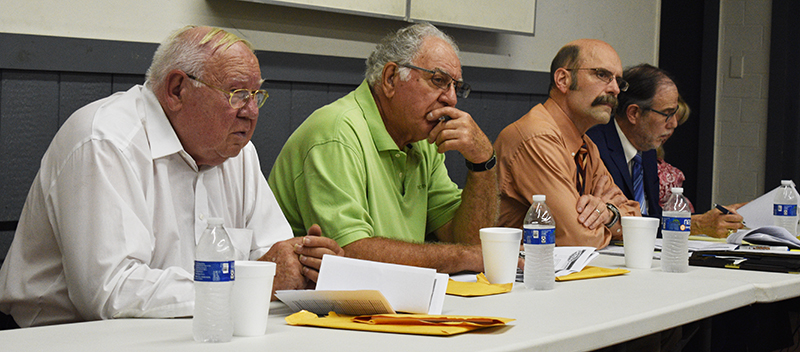
Kittanning Zoning Hearing Board members (L-R) Stan Lunsford, Tom Close, and Robert Smith have a maximum of 45 days from last night to decide the fate of a Recovery Center on the Woodward Avenue First Church of God property.
The Kittanning Borough Zoning Hearing Board heard final testimony last night regarding the proposed use of the First Church of God Woodward Avenue property as a recovery center operated by the Armstrong Indiana Clarion Drug and Alcohol Commission (AICDAC).
Over four hours of testimony was taken – two hours on September 8 and more than two hours last night.
The AICDAC wants to utilize the current worship sanctuary, chapel, and church all for a social hall for recovering addicts.
AICDAC Certified Recovery Specialist Mike Krafick, addressed the mission of their organization.
“There is a lot of confusion of what a rehab center and a recovery center is,” he told the Board. “We provide no treatment. We provide support services so people can turn their lives around.”
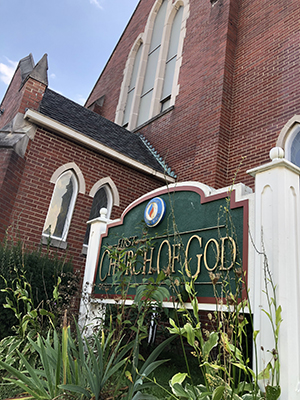
The First Church of God plans to move out of its Woodward Avenue building in January 2020.
Krafick said that he is a recovering drug addict. “I am a person in long term recovery for the past 11 years. Do I scare you? Are you threatened in any way? I am ‘those people’ that you have said that don’t need to be in our community. I raise my children in this town.”
Krafick also said that the current facility, located on Vine Street, has been operating for the past seven years.
“There was no outrage from neighbors and we were less than 100 feet away from the junior high school. In seven years, we have had zero issues with police needing to be called. We are currently less than a quarter-mile from the proposed site (Church of God property),” he said.
Since Kittanning is not familiar with a recovery center, Kim Botteicher testified about a center that has been open for the past several years in Boliver, Westmoreland County.
“We are not bringing in further addiction problems. We are helping solve problems that are there. Over the past three years, we have had 1,400 people come through our doors. We have cameras in our lighted parking lots. We have never seen any drug activity. We have grief support groups for families that have lost loved ones. We have support for distraught parents who don’t know where to turn. For recovery members, we have pool tables, and conduct social events. This will do nothing but good for your community,” Botteicher said.
Rebecca Abramson operates a recovery center in New Castle known as Kauffman’s Korner.
“When we opened, our community had similar concerns,” she said. “We have been there now for eleven years. There were a lot of prostitution and drug deals in the area. Since establishing it 11 years ago, we have not had one call to our center for police due to disturbance or fights. Our presence has actually reduced and even eliminated criminal activity. Recovery centers help to change the environment. They provide various activities, not treatment. No one stays overnight. Activities include life skills, conflict resolution, building support groups, tournaments, game nights, and dinners for the holidays. We have a gym. There is no swearing allowed and no smoking in front of our facility. We have not had to replace furniture. Our members respect the center. They are becoming positive community members. It is helping the same people now residing in your community maintain their recovery.”
Matthew Kaprutus is a member at the New Castle facility.
“I have been clean and sober for 3½ years. They helped me get through my early stage of recovery. I was able to get through a painful hip replacement without narcotics. It gave me lasting friendships. I needed to go to a positive place to change behaviors,” Kaprutus said.
Not everyone in the crowd of about 80 people was convinced.
Leslie Williams said she was a senior director for a pharmaceutical company and is new in the area.
“I have been horrified seeing some of these folk in St. Mary’s park. There are a lot of drug deals going on down there. I don’t think a recovery center will help.”
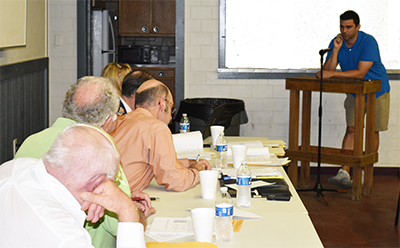
Michael Rizzo told the Zoning Hearing Board that he was against the Recovery Center because he felt it would hurt property values.
Michael Rizzo grew up in Kittanning. He serves as chairman of the Kittanning Planning Commission, but spoke as a resident last night.
“I have worked for years to bring business into town. Businesses look at property values. I see no reason why this will increase property values. Anyone who purchased a home would never expect this would move into the neighborhood.”
Sharon Ulisky said she is concerned about placing a recovery center in the middle of a senior living community.
“Kittanning has an aging population as demonstrated by the amount of senior housing. The Kittanning Cottages have many single women and it is close to the church property. Of eight houses, five are occupied by seniors. Addicts should not be sent back to the same community and same environment. Drug dealers will target the center. I know what Kittanning looked like in the past. I am concerned what it will look like in the future,”Ulisky said.
Tim Ashe has been a high school teacher, served at Grace Presbyterian Church, and has held positions as a school board member and on borough council. He has lived 150 feet from the church property for the past 52 years. He said when they were clearing brush on the trail so police could patrol the area, they found needles on sidewalks.
“There is a definite need in our community for this. But I don’t think it should be in this location,” he said.
Kathryn Bell said she lives 90 feet from the church property. She presented the Board with a petition containing 297 names of individuals against the recovery center. She said she has had to be under medical care for anxiety because of the proposed use. She said she has lived by the church for almost 40 years.
Alan “Butch” Puccetti is a retired Kittanning police officer and is running for a council seat in the Third Ward.
“My concern is how well it is going to be policed,” he said. “I have lived here since 1987. We need help with drugs, but I don’t believe this is the answer. How much supervision will they have? How much control will you have over these people once they leave the facility?”
Mike Ulisky said he lives 50 feet from the church.
“Any resident in town doesn’t want to be subjected to it. We don’t need a social hall for drug addicts,” he said.
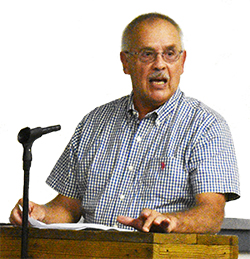
Tim Ashe has lived in the borough for 52 years. He said a lot has changed.
AICDAC Executive Director Kami Anderson said the First Church of God congregation is expecting to vacate the building whether it is sold or not by January 5, 2020. She said they were told by their insurance carrier that they would have to board up the windows and fence off the parking lot in order to have liability coverage.
This infuriated Paul DeLuca, who uses the parking lot to get to his garage.
“There has to be an alley and can’t be fenced off,” he stated. “The church was given permission to close off the alley, but there has to be a way in and out of garages in the back. It’s up to the church people to do the right thing and leave it open. It it is fenced in, I can’t get to my garage.
The Board recessed and now has until November 14 to render a decision.
“You cannot be swayed by emotions or financial considerations in making a decision,” Solicitor James Favero told the Board. “It must be based solely on evidence and if evidence supports this is an R2 and B3 zone as stated in the zoning ordinance. You can’t rewrite the ordinance to suit yourself, the applicant, or people opposed to the facility.”
Another meeting will take place to announce the decision. The Kittanning Paper and WTYM radio will announce the date and time once it is established by the Board.